A Trivandrum homeowner installs a 3kW rooftop system expecting a near-zero KSEB bill, only to see it drop by half and stall there. If that sounds familiar, the answer is usually one of five fixable problems: an undersized system, shading you haven’t noticed, a net-metering error at KSEB’s end, rising consumption that outpaced your solar capacity, or an inverter quietly underperforming. Why is my electricity bill still high after solar almost always traces back to a mismatch between what your system can produce and what your household actually uses.
| Cause | How It Shows Up | Typical Fix | Cost/Effort |
|---|---|---|---|
| Undersized system | Bill drops but plateaus below expectation | Add panels or upgrade capacity | Moderate, needs roof space |
| Shading | Generation lower than nameplate, uneven across panels | Trim trees, reposition panels, switch to micro-inverters | Low to moderate |
| Net-metering error | Good generation but bill doesn’t reflect export credit | Verify meter commissioning with KSEB, check banking cycle | Low, mostly paperwork |
| Panel soiling | Gradual output decline over weeks | Regular cleaning schedule | Low, recurring |
| Inverter fault or clipping | Output caps below panel capacity | Firmware check, inverter resizing | Moderate |
| New/hidden loads | Consumption rises faster than generation | Load audit, shift usage to daylight hours | Low, behavioral |
| Wrong system type for usage pattern | Backup drains grid import at night | Reassess on-grid/hybrid/off-grid choice | High if system swap needed |
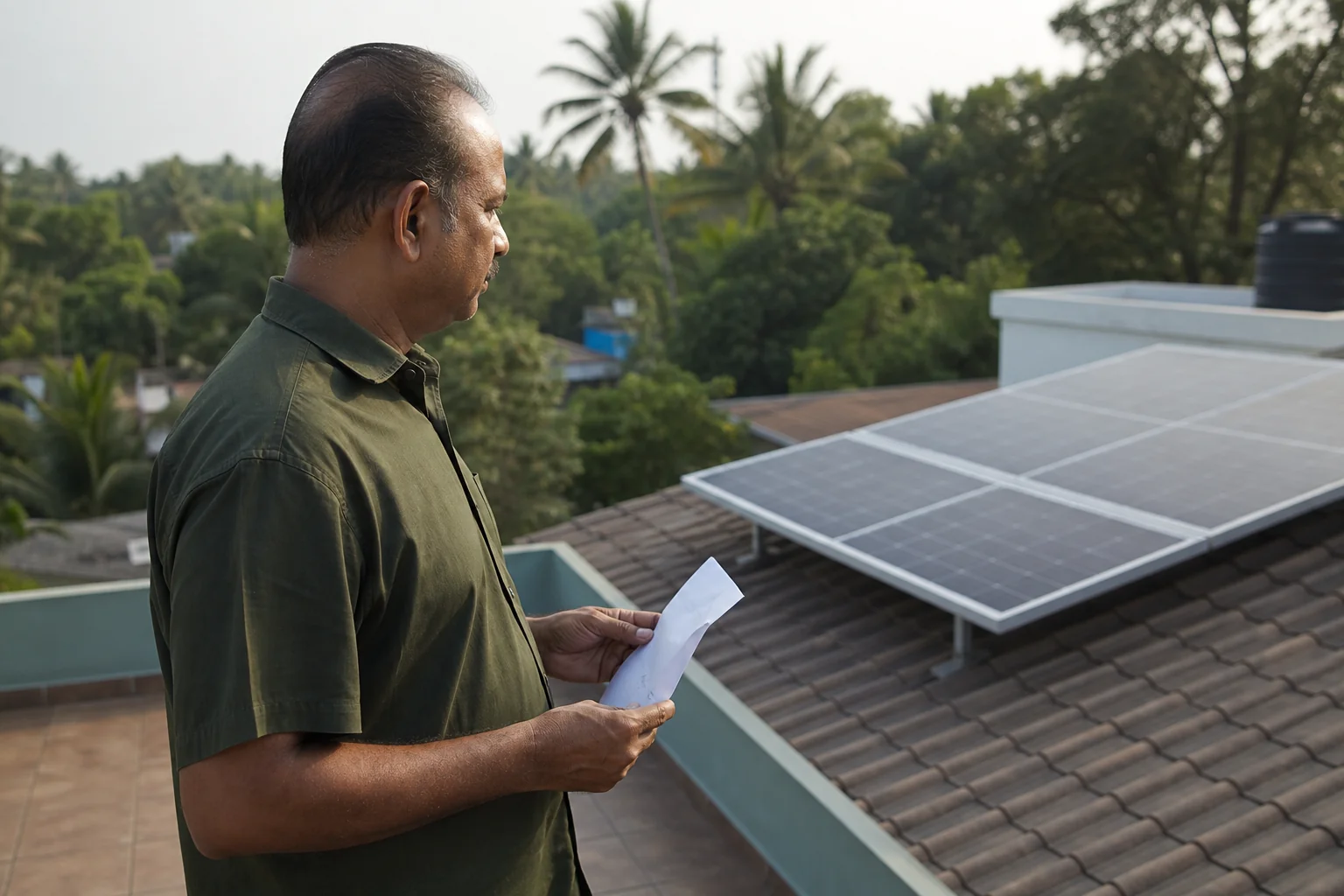
This is the single most common reason a bill stays stubbornly high. Many installers size a system based on the electricity bill from a year or two ago, before a family added an air conditioner, an electric vehicle charger, or a second refrigerator. Once consumption grows and generation doesn’t, the gap gets billed at KSEB’s regular tariff slabs, which climb steeply for higher usage.
A correctly sized system should be based on your sanctioned load, your last 12 months of consumption, and any appliances you plan to add within the next few years. If you’re still deciding on capacity, our guide on how many solar panels are needed for a 3 bedroom house in India walks through the math step by step. As a rule, undersizing by even 1kW on a typical household can leave hundreds of rupees uncaptured every month.
The fix isn’t always a full system replacement. Many rooftops have room to add panels to an existing string, provided the inverter has spare capacity. A quick way to check whether your current setup matches your usage is Solarconnect’s Solar Calculator, which estimates savings against actual KSEB tariffs rather than generic assumptions.
Shade is sneaky. A coconut tree that was harmless at installation can grow tall enough within two or three monsoon seasons to cast a shadow across part of your array by mid-morning. Water tanks, chimneys, and even a neighbor’s new second floor can do the same. Because panels in a series string often perform at the level of their weakest link, a shadow on just one panel can drag down output for the entire string.
In Kerala specifically, dense vegetation and tightly packed plots make shading more common than in drier, more open regions. If your roof has partial obstructions that can’t be removed, micro-inverters are often the better choice over a traditional string inverter, since each panel operates independently and shade on one doesn’t cripple the rest. Understanding how panel technology affects this is covered in our piece on on-grid vs off-grid vs hybrid solar systems, which also touches on inverter architecture choices.
A simple test: check your monitoring app’s per-panel or per-string output around 10 a.m. and 2 p.m. If one section consistently underperforms at the same time each day, shading is very likely the cause.
Even a well-generating system can leave you with a high bill if the billing mechanics are off. KSEB’s net-metering setup credits the electricity you export back to the grid against what you import, usually settled over a billing cycle rather than in real time. If the bi-directional meter wasn’t commissioned correctly, or if there’s confusion about how banked units carry forward, your bill may not reflect the true value of your exported solar power.
Common mistakes we see across South Kerala installations include:
If your generation looks healthy on the monitoring app but the KSEB bill doesn’t show a matching drop, request your last bill and compare the “units exported” figure against your app’s export reading. A mismatch points to a metering or paperwork issue, not a system fault. Solarconnect handles KSEB net-metering liaison as part of installation, but if you installed elsewhere, it’s worth having this checked independently.
Kerala’s humidity, combined with dust and salt-laden coastal air, builds up on panel surfaces faster than in drier states. A layer of grime can reduce output by 5-15% before it’s visible to the naked eye. If your bill crept up gradually over a few months rather than jumping suddenly, soiling is a strong suspect. Our detailed breakdown on solar panel cleaning frequency for Kerala’s dust and coastal air explains how often to clean based on your location and roof exposure.
Inverters that are undersized relative to panel capacity will “clip” excess power, throwing away generation you already paid for. A hybrid inverter with poor configuration can also prioritize battery charging over grid export at the wrong times, quietly increasing your grid dependency. If you’re troubleshooting a fault code or unusual output pattern, common mistakes when choosing a hybrid solar inverter is a useful next read, and checking your inverter’s monitoring log for repeated fault entries is worth doing before assuming the panels themselves are at fault.
Solar only offsets electricity used while the sun is generating, unless you have battery backup. Motor pumps, water heaters set on timers, refrigerators, and night-time air conditioning all draw from the grid when your panels are idle. If your household’s usage pattern skews toward evenings and nights, even a perfectly sized daytime solar system won’t move the needle much on your total bill.
Track when your highest-consumption appliances actually run. Shifting laundry, water heating, and EV charging to daylight hours lets you use solar power directly instead of paying grid rates for the same appliance later. For households wrestling with frequent outages that push more load onto backup and grid power, our guide on the best solar system for frequent power cuts in Kerala covers battery sizing strategies that reduce this exact leak.
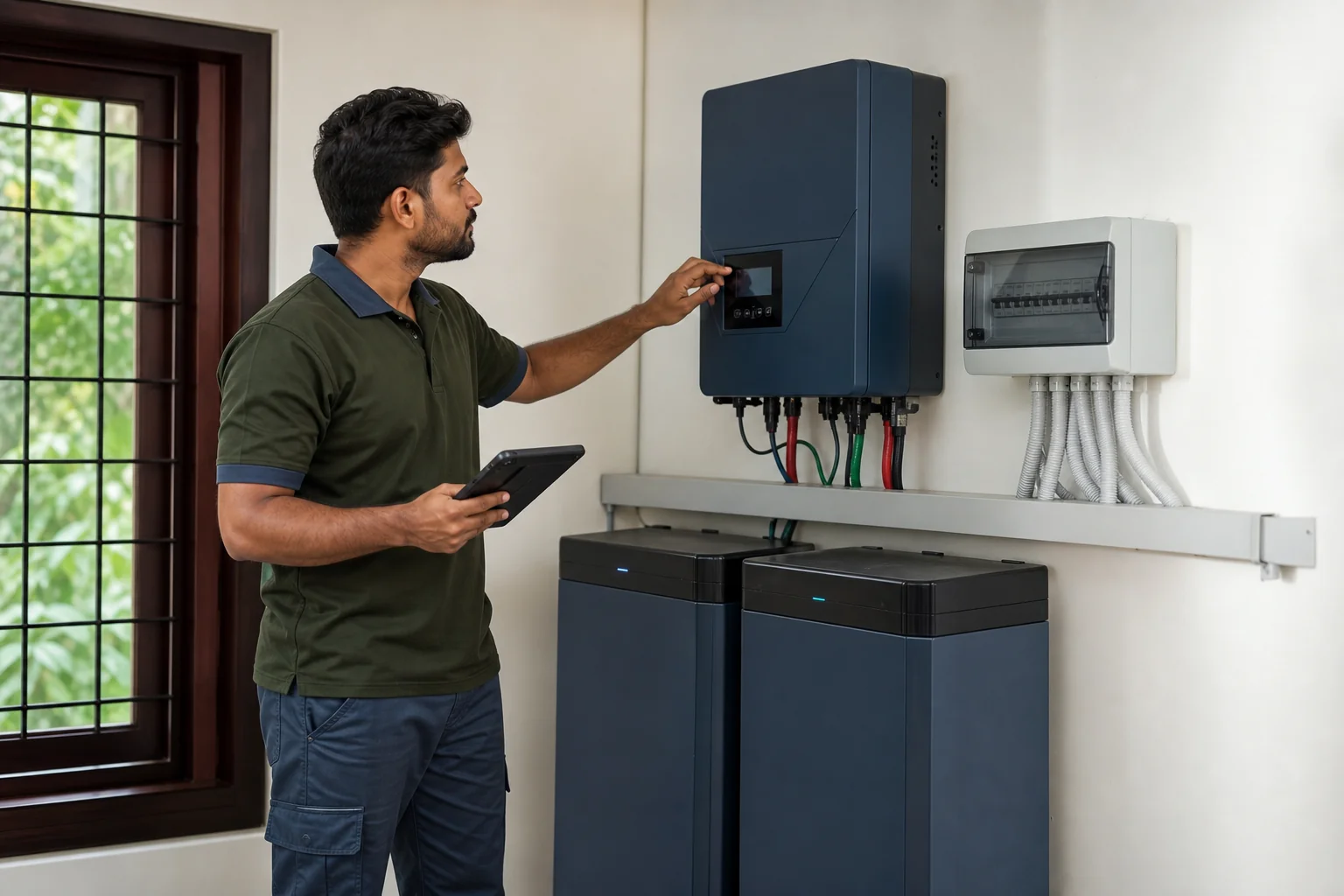
Sometimes the issue isn’t a fault at all, it’s a mismatch between the system type installed and how you actually use electricity. A pure on-grid system offers no backup during KSEB outages, so any load during a cut still needs alternate power, sometimes at a cost. A hybrid system with a poorly sized battery can end up charging from the grid rather than solar, adding hidden import costs.
| System Type | Backup During Outages | Net-Metering Eligible | Best For |
|---|---|---|---|
| On-Grid | No | Yes | Stable grid areas, lowest cost, fastest payback |
| Off-Grid | Full, via battery | No | No KSEB connection, remote shops or plots |
| Hybrid | Partial to full | Yes, with limitations | Frequent outages plus desire for KSEB bill credit |
If your bill stayed high because your system type doesn’t match your actual power reliability needs, it’s worth revisiting the decision entirely. Our detailed comparison of on-grid vs off-grid vs hybrid solar systems breaks down which configuration suits different household patterns in Kerala.
If you’ve checked shading, cleaning, and net-metering status and the bill still doesn’t add up, it’s time for a structured energy audit rather than guesswork. A proper audit reviews your actual utility bills against expected generation, inspects panel and inverter performance data, and identifies consumption patterns you may not have noticed. This is especially useful for households or small businesses where usage has grown since the original installation, or where the original design brief didn’t account for future load.
Solarconnect’s energy audit service covers consumption analysis, a full review of utility bills over multiple cycles, and site-level efficiency recommendations, whether or not we installed your original system. According to the Ministry of New and Renewable Energy, rooftop solar underperformance complaints frequently trace back to design assumptions that no longer match real household usage, which is exactly what an audit is built to catch.
A system that looked right on paper two years ago may no longer match your household today. An audit tells you exactly where the gap is, instead of leaving you to guess.
You can get a sense of whether your system was sized correctly to begin with by revisiting our explainer on how solar panels work at home, which covers the basic generation math your system should be hitting under normal Kerala sun conditions.
A correctly sized on-grid system typically cuts bills by 70-90% for households with mostly daytime consumption. If your drop is closer to 30-40%, one or more of the issues above is likely at play.
Yes. Export credits are often settled over a billing cycle, not instantly, so a newly commissioned system may show a higher bill for the first cycle or two before credits catch up.
Cloud cover reduces generation on heavy rain days, but well-designed systems account for Kerala’s seasonal patterns in their sizing. A single rainy month shouldn’t meaningfully change your annual savings.
Rule out shading, soiling, and net-metering errors before spending on additional panels. Adding capacity to a system with an unresolved shading or metering issue wastes money on the very problem you’re trying to fix.
If your KSEB bill still doesn’t match what your solar system should be delivering, don’t keep guessing month after month. Know your savings with Solarconnect’s free Solar Calculator, or speak to a solar expert for a proper energy audit and net-metering review. Our team has handled 600+ installations across South India and knows exactly where Kerala rooftops tend to lose generation, so getting your bill back on track starts with one conversation, not another guess.
Ask ten specific questions before you sign anything, and you'll know within minutes whether a solar installer is worth your rooftop. The questions to ask solar installer before signing contract...
My cousin in Kollam once got two solar quotes on the same day: one from a national brand's call centre, one from a Trivandrum-based crew that had already wired half his street. The loca...
A commercial energy audit before solar installation tells you exactly how much power your business actually uses, when it uses it, and where it leaks money, before anyone quotes you a panel cou...
© 2026 SOLAR CONNECT, All rights reserved. Developed by Crantia Technologies

