The Varghese household in Kayamkulam lost power eleven times in July 2026 alone, most cuts lasting two to four hours with zero warning from KSEB. The best solar system for frequent power cuts in Kerala is a hybrid solar-battery setup, not a plain grid-tied array, because it keeps critical loads running the instant the grid drops, with no manual switching. Six months after installing one, this family’s outages went from a daily disruption to a non-event.
| Detail | Before Solar | After Hybrid Solar (6 months) |
|---|---|---|
| Power cuts per month (monsoon season) | 8-12 unscheduled outages | Same grid outages, but zero household disruption |
| System type | Grid-only, no backup | Hybrid (grid + solar + lithium battery) |
| System size | N/A | 4kW solar array + 5kWh lithium battery |
| Inverter | N/A | Hybrid inverter with automatic transfer switch |
| Installation timeline | N/A | 26 days, site visit to switch-on |
| Monthly KSEB bill | Roughly ₹3,800 | Roughly ₹1,100 |
| Backup runtime on battery | 0 hours | 4-6 hours for essential loads |
| Subsidy applied | N/A | MNRE/PM Surya Ghar subsidy on the solar portion |
Anil Varghese runs a small accounting practice from home in Kayamkulam, Alappuzha district. His wife, Reshma, works remotely for a Bengaluru firm. Before solar, their routine bent around KSEB’s unpredictable cuts: laptops charged obsessively, a small UPS kept the router alive for maybe twenty minutes, and the refrigerator holding insulin for Reshma’s mother was a constant worry during long monsoon outages.
The nearest transformer serves a stretch of road prone to tree-fall damage during monsoon winds, so outages weren’t rare exceptions, they were a monthly pattern. A grid-tied on-grid solar system, the kind most Kerala homeowners install to cut their bill, would have done nothing for this specific problem. On-grid inverters are designed to shut down the moment grid power fails, as a safety requirement, so the panels on the roof go dark exactly when you need them most. Anil learned this the hard way after an initial online quote from Loom Solar’s DIY kit page didn’t flag it.
There are three broad system types, and picking the wrong one is the single most common regret among Kerala homeowners chasing outage relief. Our detailed comparison in On Grid vs Off Grid vs Hybrid Solar System: Which One Fits Your Home? covers this in depth, but the short version for outage-prone homes is this: an off-grid system works if you have no KSEB connection at all, an on-grid system is cheapest but offers zero backup, and a hybrid system combines solar generation, battery storage, and grid connection with automatic switchover.
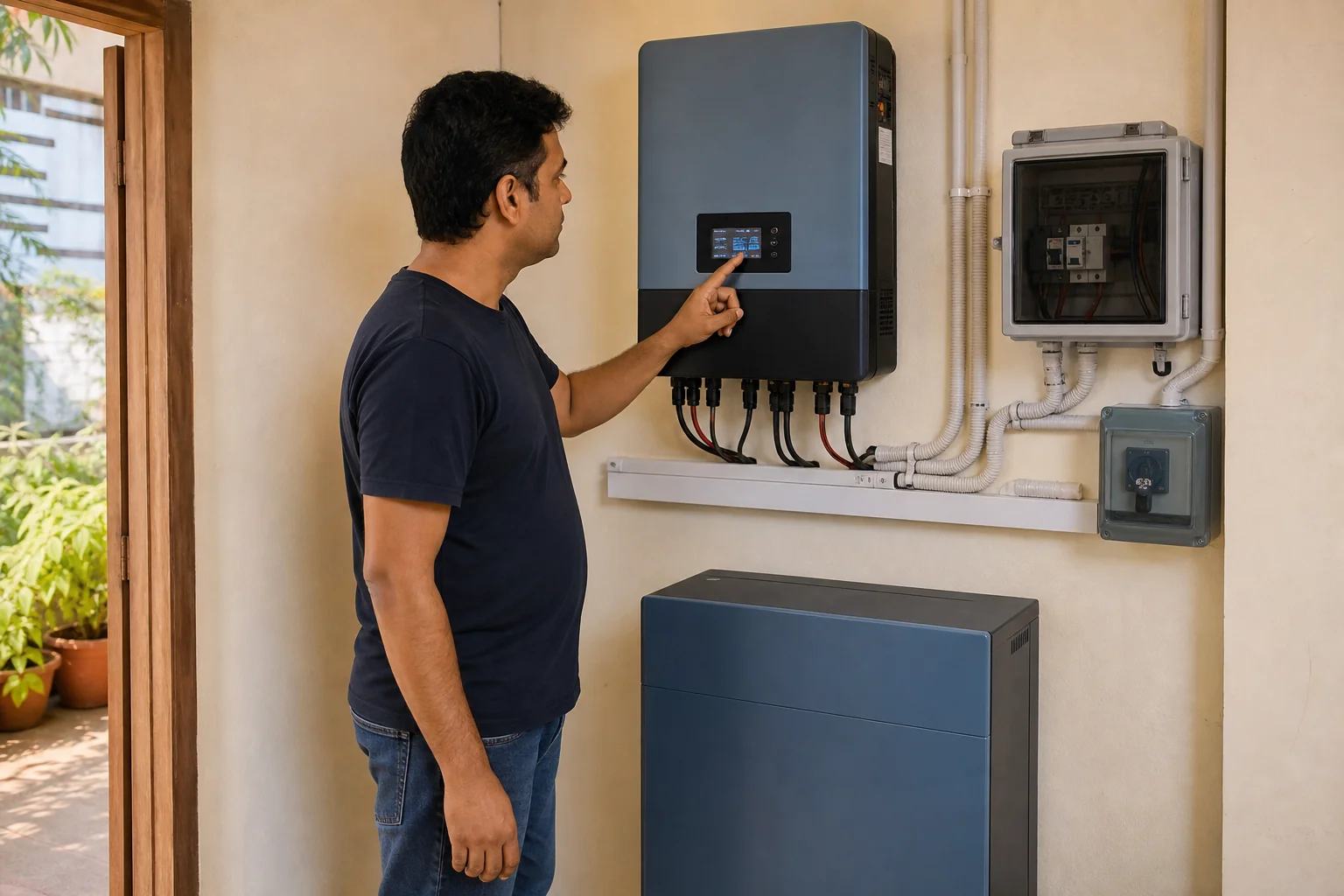
For a household dealing with frequent, unscheduled cuts, the hybrid inverter is the component that actually solves the problem. It monitors grid voltage continuously and switches to battery power in under 20 milliseconds when the grid drops, well before most appliances even register a break. That’s the mechanism behind why hybrid systems are consistently the best solar system for frequent power cuts in Kerala, rather than a panel-brand or wattage decision.
Solar Connect’s team started with a load audit rather than a sales pitch. Anil’s essential backup load came to roughly 1.2kW: refrigerator, router, three fans, LED lighting, and the water pump for short bursts. That number, not the family’s total daily consumption, decided the battery size.
Anil also asked hard questions before signing, comparing this quote against a national brand’s proposal. If you’re at this stage, our post on how many solar panels a typical 3-bedroom house needs is a useful sanity check on sizing before you commit to any installer’s numbers.
The full process ran 26 days. It started with a site survey to check roof orientation, shading, and structural load capacity, followed by a CAD layout and yield simulation. Paperwork, including the net-metering application to KSEB, moved in parallel with panel and battery procurement.
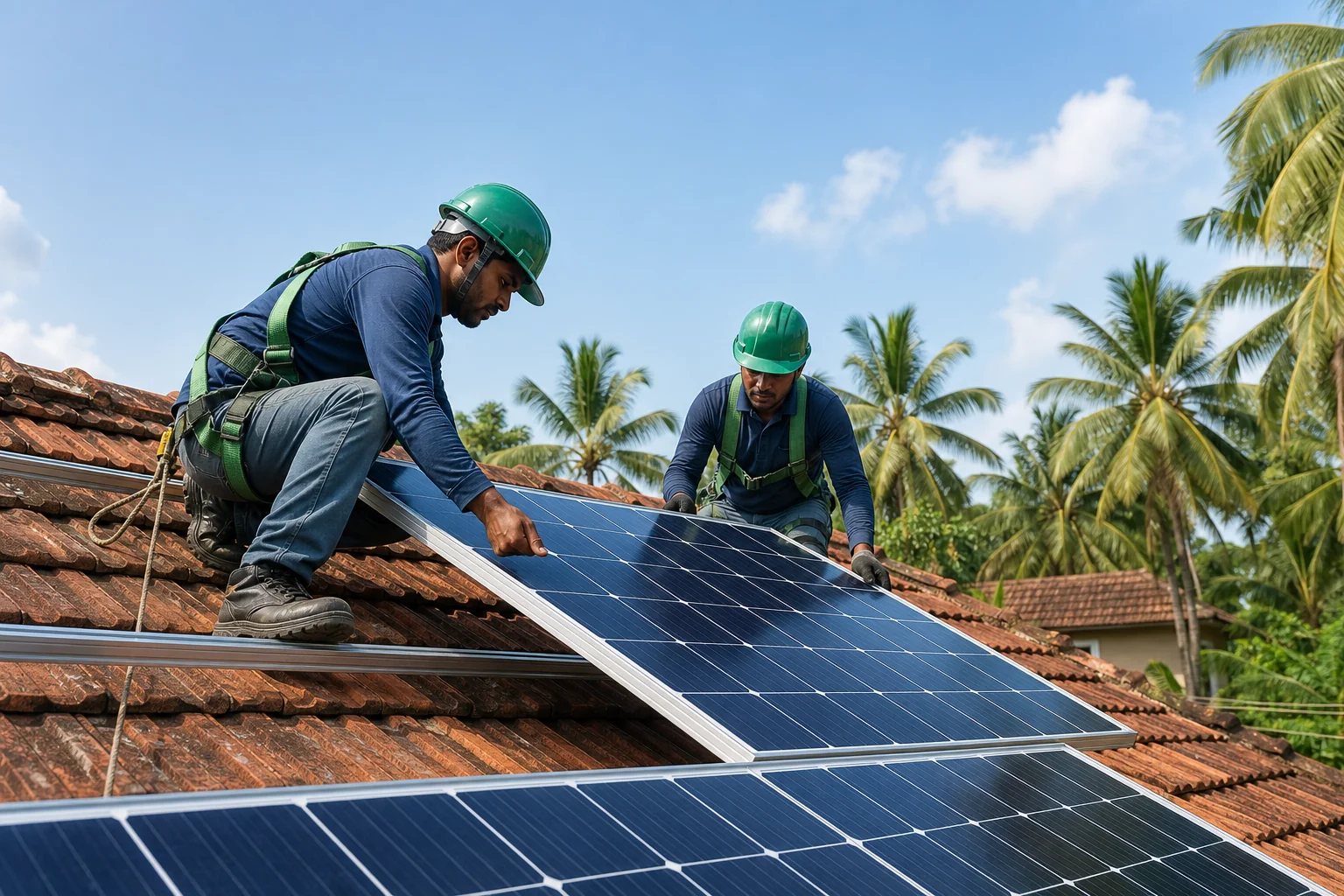
Mounting and wiring took three days on-site. Commissioning included a full test of the automatic transfer switch, deliberately cutting mains power to confirm the battery picked up the essential circuits without a flicker. KSEB’s final net-metering approval, historically the slowest step for many Kerala installs, came through in just under two weeks. For a broader walk-through of what to expect at each stage, see our guide on the solar installation timeline from site visit to switch-on.
The most telling number isn’t the bill, it’s the absence of disruption. Since switch-on in February 2026, the Varghese home has weathered the same grid instability as before, but Reshma’s mother’s insulin fridge has never lost power for more than the 20 milliseconds it takes the inverter to switch over.
The KSEB bill fell from around ₹3,800 a month to roughly ₹1,100, a drop of about 70%, not the full elimination some homeowners expect. That gap is normal and explained in our post on why electricity bills stay high even after solar: net-metering credits only offset daytime export, and some evening consumption still draws from the grid or a partially charged battery.
During monsoon cloud cover, generation dropped by roughly 30-40% on the darkest days, but the battery, charged during earlier sunny stretches, still carried the essential load through most outages. Maintenance so far has been limited to two panel-cleaning visits to clear monsoon grime and coastal salt residue, both covered under the AMC.
Not quite every home needs the same configuration. The right call depends on your grid connection status, budget, and how critical backup actually is to your household or business.
| Situation | Recommended System | Why |
|---|---|---|
| Frequent, unscheduled outages, KSEB-connected home | Hybrid solar with battery | Automatic backup for critical loads plus bill savings |
| Stable grid, main goal is lower bills | On-grid solar | Lowest cost, fastest payback, no backup needed |
| No KSEB connection (shop, remote plot) | Off-grid solar | Full independence from the grid entirely |
| Small business needing uptime for POS, refrigeration | Hybrid, sized to critical load | Protects revenue-critical equipment during cuts |
Shop owners without a formal electricity board connection face a different calculus entirely, one we cover in detail for off-grid solar systems for shops without an EB connection. Kerala’s coastal and hilly terrain also affects which brands and mounting hardware hold up best; that’s worth a direct conversation with your installer rather than a generic online configurator.
Several avoidable errors show up repeatedly in Kerala homes that installed hybrid solar and still felt disappointed by their backup performance.
Can hybrid solar run my air conditioner during a power cut?
It depends on battery size. A 5kWh battery sized for essential loads like fridges, lights, and a router usually won’t carry a full AC unit for long; homes wanting AC backup need a larger battery bank sized specifically for that load.
How long does the battery last during an outage?
The Varghese system delivers 4-6 hours of essential-load backup on a full charge. Runtime depends on battery capacity, how much charge was stored before the outage, and how many circuits are wired to the backup panel.
Does hybrid solar still work on cloudy monsoon days?
Panels keep generating on cloudy days, just at reduced output, typically 30-50% lower than clear-sky generation. Our detailed explainer on what happens to solar panels on a cloudy day covers the mechanics.
Is subsidy available for a hybrid system with battery?
The MNRE/PM Surya Ghar subsidy applies to the solar generation capacity itself; battery storage typically isn’t subsidised under the current scheme. Check current MNRE subsidy eligibility criteria before finalising your system size.
If daily outages are dictating how you live, a properly sized hybrid system, not a generic quote, is the fix worth pursuing. Solar Connect’s team in Thiruvananthapuram runs the same load audit and KSEB liaison process described in this case study for households across Kerala. Run your numbers with the free Solar Calculator to see what a hybrid setup could save on your KSEB bill, then get a free quote to talk through battery sizing for your specific household. If you’re still comparing system types, speak to a solar expert before you commit to any installer’s proposal.
Ask ten specific questions before you sign anything, and you'll know within minutes whether a solar installer is worth your rooftop. The questions to ask solar installer before signing contract...
My cousin in Kollam once got two solar quotes on the same day: one from a national brand's call centre, one from a Trivandrum-based crew that had already wired half his street. The loca...
A commercial energy audit before solar installation tells you exactly how much power your business actually uses, when it uses it, and where it leaks money, before anyone quotes you a panel cou...
© 2026 SOLAR CONNECT, All rights reserved. Developed by Crantia Technologies

